Cederberg Conservancy
In 1967 the removal of any Cedar tree was halted in the Cederberg and all other exploitation ended in 1973 with the proclamation of the Cederberg Wilderness. In 2004 the Cederberg Wilderness received World Heritage Site status as part of the Cape Floristic Region.
More about the Cederberg Conservancy…
The Cederberg Conservancy was constituted in 1997 as a voluntary agreement between landowners to manage the environment in a sustainable manner. It consolidates 22 properties in the central Cederberg as one of the core corridors of the Greater Cederberg Biodiversity Corridor and it is active through quarterly meetings and awareness days. The conservancy incorporates 182 000 hectares of protected land.
Visitors to the area can engage in bird watching or easy hikes to the Stadsaal caves and Elephant rock art. For the more adventurous visitor the Conservancy offers Mountain bike trails or overnight hiking trials that vary from one to five nights, depending on your level of fitness and ability.
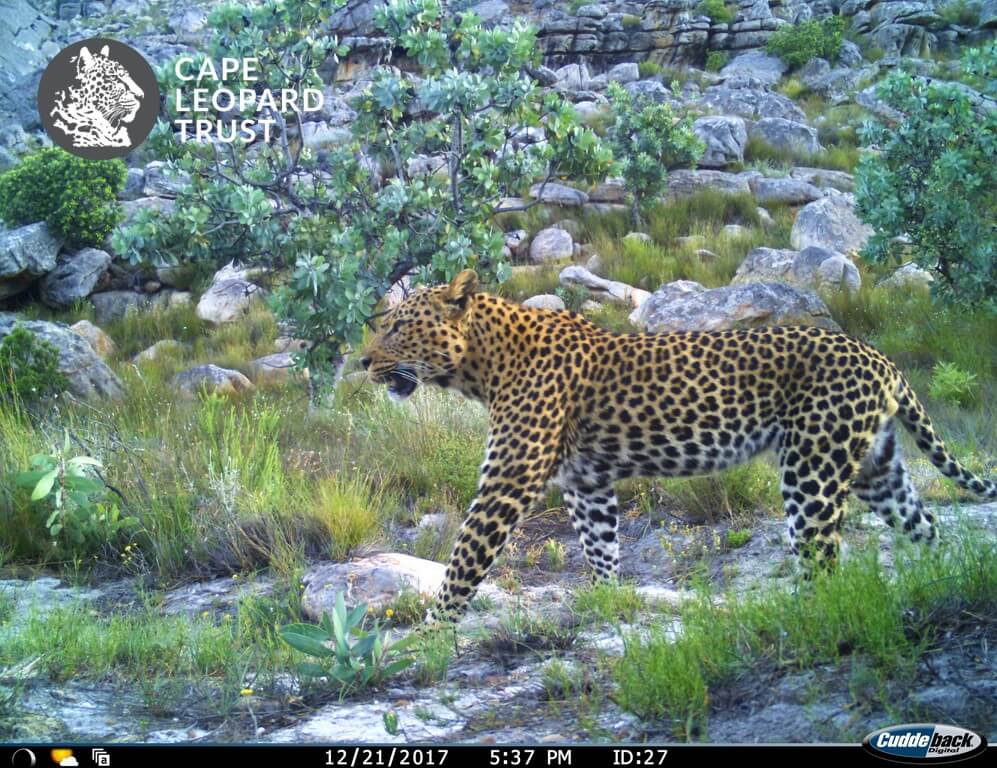
The Conservancy is the proud custodian of the Clanwilliam Cedar tree (Widdringtonia cedarbergensis) and offers refuge to the rare Cape Leopard.
The isolated and relatively under-developed area of about 182 000 hectares is safe to visit and offers visitors a variety of activities.
Mount Ceder & the
cape Leopard Trust
The Cape Leopard Trust (CLT) was established with the primary objective of facilitating and promoting research and conservation of the Cape’s predator diversity. The conservation strategies includes several bio-geographical research projects on leopards and their habitat as well as providing advisory services relating to farmer-predator interactions. A key aim of the project is to foster environmental education, particularly of children. The CLT was launched in August 2004 as an active predator conservation organisation in the Cape and is registered as an NGO, IT 2720/2004. From the outset the objectives of the Trust have revolved around adopting the Cape leopard as a ‘flagship species', to study, understand and highlight the plight of these animals, and other threatened predators, and to find effective and sustainable ways to alleviate the devastating problems of human-wildlife conflict.
Evidence thus far shows that the Cape leopards differ from leopards elsewhere and may well be a sub-species, though this is still to be confirmed. The CLT uses the results of research to convince farmers to alter their attitudes towards ‘problem animals’ and find more effective livestock management techniques. To date, research has taken place primarily in the Cederberg Mountains, where the project is based, but the CLT also runs projects in the Gouritz Corridor, Boland Mountains (2010) and Namaqualand. The Cape Leopard Trust is based at Matjiesrivier Nature Reserve in the Cederberg, and works in partnership with the Cederberg Conservancy and CapeNature in its efforts to conserve our natural heritage. For more information visit their website.
Sandfish Conservation
Mount Ceder is proud to work together with the team at Freshwater Research Center to help increase Sandfish survival and improve the quality of their riverine habitats.
Mount Ceder Conservation
The Sandfish is the most threatened fish species in the Groot Rivier that runs through Mount Ceder. They are the most threatened large, migratory fish in South Africa. As a migratory species, Sandfish are ambassadors for healthy flowing rivers and umbrellas for other freshwater biodiversity.
Our ecosystem desperately needs the Sandfish to survive.
Mount Ceder is proud to work together with the team at Freshwater Research Center to help increase Sandfish survival and improve the quality of their riverine habitats.
Conserving sandfish and their habitat
The Saving Sandfish project (run by the Freshwater Research Centre) is working with local land-owners, communities and other partners to help increase sandfish survival and improve the quality of their riverine habitats. The project is undertaking Africa’s biggest ever freshwater fish rescue, collecting young fish from the wild and relocating them to sanctuaries created by removing alien fish from local farm dams. Once they grow to a big-enough size to be safe from alien fish predation, the sandfish will be released back into the wild to boost the population and avoid extinction. The project will also be surveying the Cederberg’s most rugged and remote rivers to assess the state of freshwater fish populations, including the Groot River and its tributaries.
Support Freshwater Research Center by following their social media pages to see the excellent work they are doing: